
Understanding what autism is can feel confusing when your child is only two or three years old. Early childhood moves quickly and you may find yourself trying to make sense of new behaviours, changing routines or growing differences in communication. If you are feeling unsure, you are not alone. Many families reach out at this stage looking for clarity, reassurance and practical guidance.
At First Bridge Education, we meet families every day who want to better understand their child’s profile and what early intervention could do for them. Our role is to guide you with warmth and practical insight, so that the journey ahead feels steadier and less overwhelming.
What does autism really mean in early childhood?
Families sometimes hear the phrase used as if it describes one single experience. Autism is never one thing. It describes a broad spectrum of developmental differences that can look very different from child to child, especially in the early years.
Some children may show strong visual learning skills or excellent memory for routines. Others may communicate in ways that feel less typical for their age. Some may love deep pressure, repetition or predictable play, while others may feel unsettled by noise, new environments or changes in routine.
Understanding that autism is a spectrum of needs can help families reframe behaviours with greater compassion. It also reinforces an important truth. Many strengths and abilities sit alongside the challenges. With the right environment and support, these strengths can shine.
What autism is not
Families sometimes feel anxious because of things they have heard from others or seen online.
Autism is not a behaviour problem. An autistic child who becomes overwhelmed, withdraws or reacts strongly is not being difficult. They are communicating discomfort or emotion in the only way they can in that moment.
Autism is not caused by parenting. Nothing a parent or carer has done creates or triggers autism. It is a neurodevelopmental difference that a child is born with.
Autism is not one pathway or a fixed future. Young children grow, learn and change. With the right support, their strengths can flourish and their daily life can become calmer and more predictable.
Autism is not a loss of potential. Many children with autism learn in rich, meaningful ways. Their abilities may not always show up in typical forms, but with the right environment they can make significant progress.
Understanding what autism is not helps create space for a more compassionate and hopeful view of your child’s development.
What strengths and abilities might families notice?
Alongside observed needs, many children described as autistic demonstrate bright and unique strengths. These can include:
- Logical thinking and strong focus
- Preference for visual learning methods
- Excellent memory for details, sequences and routines
- Authentic communication styles
- Strong and joyful special interests
- Creative problem solving
Recognising these strengths helps you (and us) build a more balanced, empowering view of your child’s profile.
Why is it called the autism spectrum?
You may have heard the phrase autism spectrum and wonder what it really means. The word spectrum is used because autism does not follow one single pattern. Instead, it describes a wide range of strengths, challenges, communication styles and sensory needs that vary from child to child.
Some children may speak confidently but find social interaction confusing. Others may communicate nonverbally yet show remarkable problem-solving skills. One child may be highly sensitive to noise, while another seeks extra movement or touch for comfort. These differences are not levels of ability; they are variations in how each child experiences and responds to the world.
Using the word spectrum helps emphasise that autism is not a fixed category with one profile. It reminds us that every child deserves to be understood as an individual, with their own combination of abilities, needs and ways of relating. This is especially important in the early years, when children aged two to five are still developing rapidly and their strengths and preferences can emerge in unique ways.
At First Bridge Education, we view the spectrum as a guide to understanding, not a label to narrow a child’s potential. Recognising the spectrum allows us to tailor support, celebrate individual strengths and create an environment where each child can learn, grow and feel genuinely seen.
How First Bridge Education supports young children
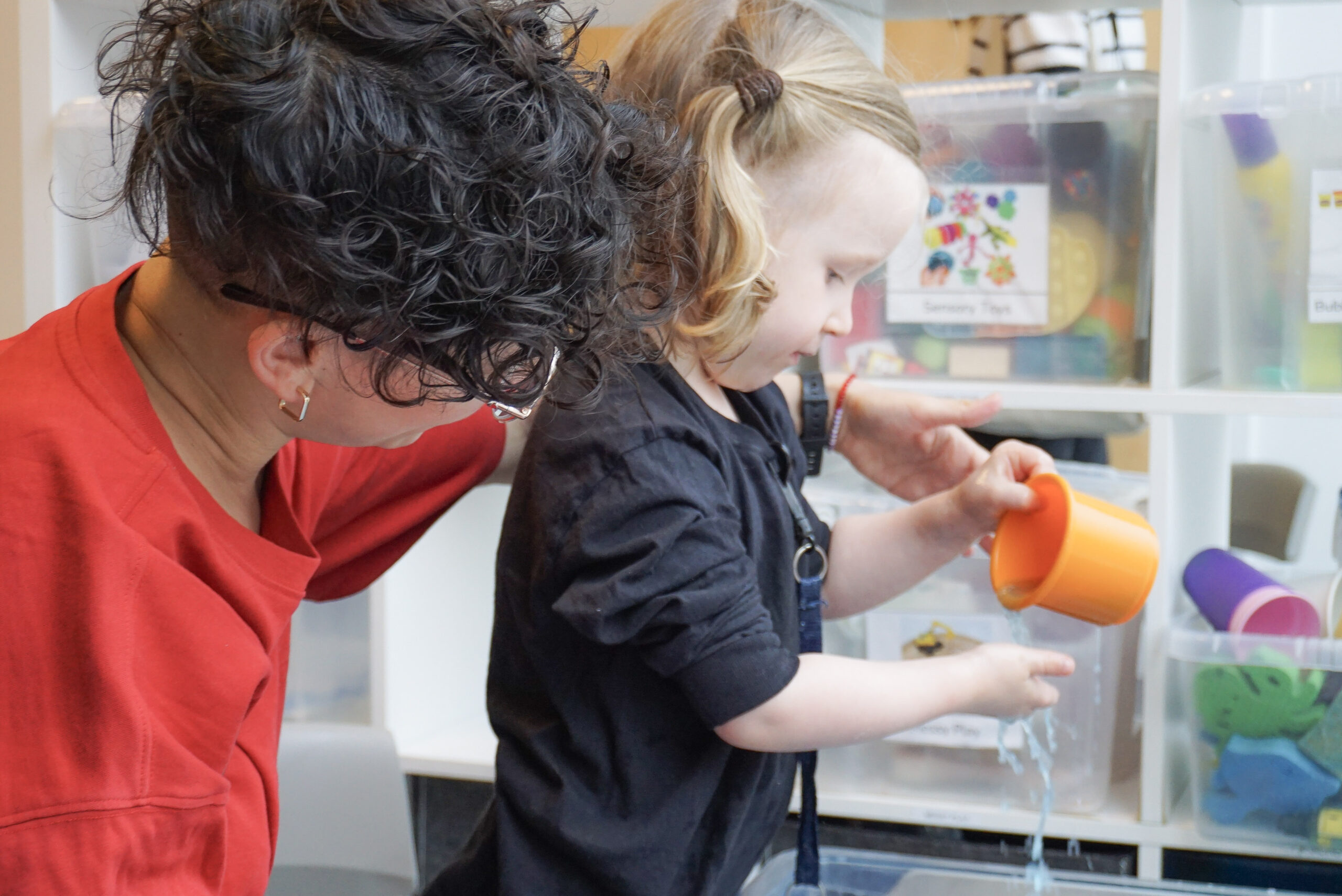
Families often tell us they want support that is both structured and nurturing. In our specialist nursery and school, children aged two to nine learn in small classes with consistent adults who know their strengths, comfort zones and developmental needs. Our approach is rooted in Applied Behaviour Analysis (ABA), delivered by a highly trained team with deep experience in early childhood development.
What does support look like day to day?
Individual learning programmes: Each child receives a personalised plan built around their communication style, sensory profile, play skills and strengths.
Warm, consistent relationships: Children thrive when they feel safe. Our teachers and behaviour therapists work with them daily, building trust and helping them explore new skills.
Structured classrooms: Visual supports, predictable routines and low sensory demand help children settle and learn with confidence.
Benefits for your child and family
When support matches a child’s needs, the advantages ripple outwards.
For your child – They become more confident, more engaged and more able to use their natural strengths as tools for learning. Daily life becomes easier to navigate and new skills become more achievable.
For the family – Stress reduces, routines become clearer and you gain confidence in how to support communication and emotional needs. Families often tell us that working in partnership with us helps them move from uncertainty to clarity.
Looking ahead
If you are exploring what autism is or wondering whether your two to five year old may benefit from additional support, you do not need to navigate this alone. Understanding your child’s development is a journey and having a knowledgeable, warm team beside you can make a profound difference.
If you would like to learn more about our approach, our environment or how we support young children through early intervention, we would love to talk with you. Contact us to speak our admissions team and arrange a tour of our nursery and school. You can also join one of our upcoming free webinars designed to give you a clear and reassuring insight into how Applied Behaviour Analysis and early intervention work in our nurturing specialist nursery and school.