

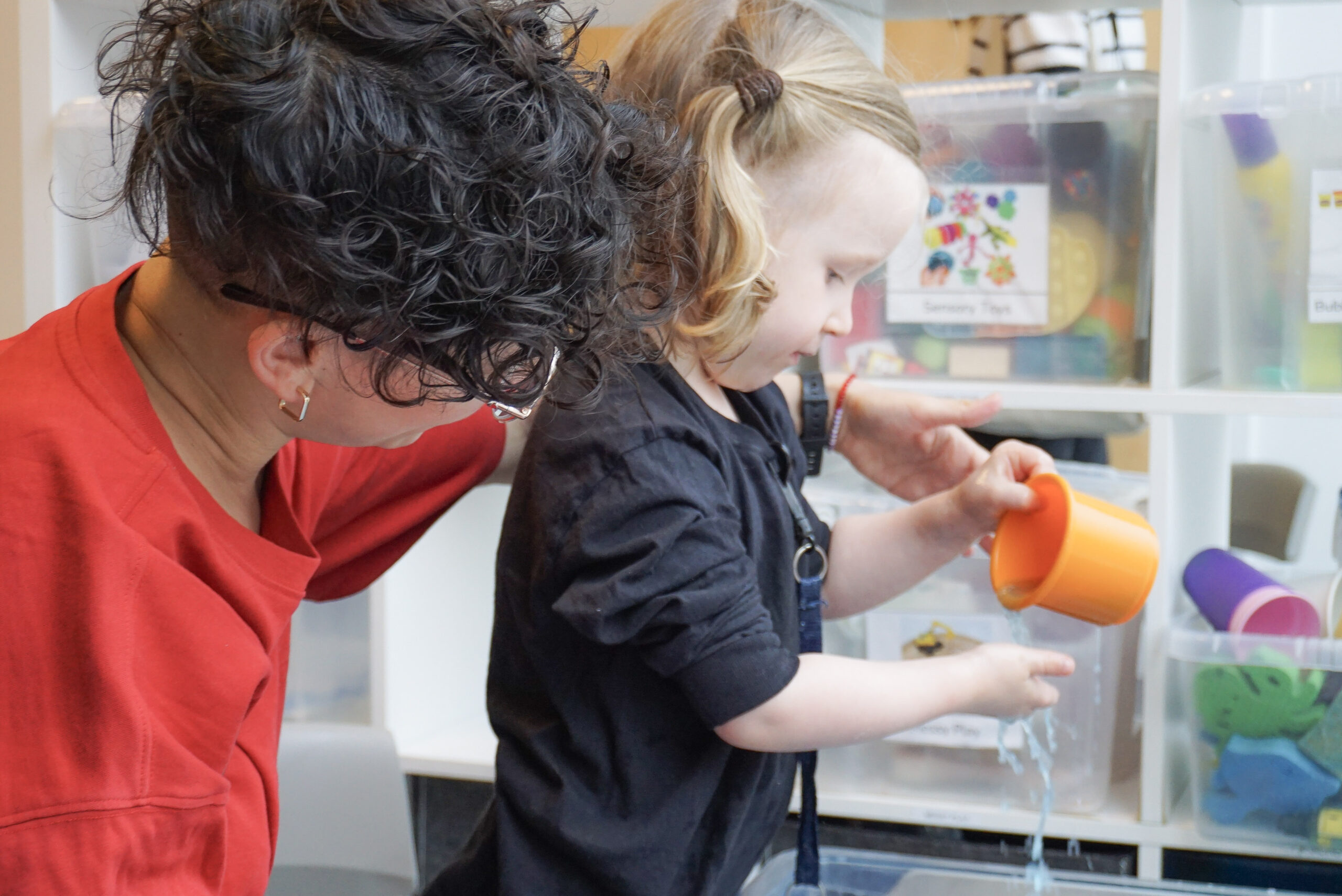
Choosing a nursery setting for an autistic child is rarely just about convenience. For many families, it is about finding an environment that genuinely understands autism and responds with intention, individualised care and expertise.
The early years play a critical role in shaping how children experience learning, relationships and their own sense of safety, which makes the quality and suitability of provision especially important.
What Is an SEN or Autism Specialist Nursery?
A specialist autism nursery is often shaped around how autistic children experience the world. Structure, routine, specialist expertise and sensory awareness are built into everyday practice and inform decisions from how the day is organised to how adults communicate and respond. This approach helps reduce anxiety and build trust that creates strong foundations for meaningful development.
For families exploring support for nursery aged autistic children, understanding what defines autism-specific provision can help explain why some settings feel calmer, more predictable and more supportive than others.
When Should I Consider a Specialist Autism Nursery?
You may begin considering an autism nursery if you notice that your child needs a more structured, predictable environment to support communication, emotional regulation and day-to-day transitions.
This may include situations where your child:
- Becomes overwhelmed in busy nursery environments
- Finds changes in routine particularly difficult
- Needs more time and support to engage with peers or activities
- Responds positively to structured, predictable settings
Early support does not require a formal diagnosis or an Educational Health Care Plan (EHCP). Many families explore autism-friendly provisions based on their child’s needs, recognising that the right environment can make a significant difference during early development.
Specialist Autism Nursery vs Early Intervention Programmes
Specialist Autism nurseries and early intervention programmes both support autistic children in the early years, but they differ in structure and purpose.
An autism nursery is a registered nursery setting designed specifically for autistic children, where care and education are delivered within a nursery framework.
Early intervention programmes, by contrast, provide structured, therapy-led education and support for nursery-aged children without operating as a nursery. These programmes may work alongside a child’s nursery placement, prepare them for nursery or school, or provide support outside of a traditional nursery environment.
Understanding the difference can help families decide which type of support best meets their child’s needs at a particular stage.
How Does a SEN Friendly Nursery Differ from a Mainstream Nursery?
The key difference lies in intentional design. Nurseries that specialise in supporting children with special educational needs and disabilities do not adapt provision only when challenges arise. Instead, specialist support is embedded into every part of the day, from arrival through to transitions at home.
Differences are often most visible in:
- Predictable routines and clear daily structure
- Autism-specific staff training and experience
- Sensory-aware learning environments
- Small group learning and individualised support
Together, these features help reduce anxiety, increase engagement and create consistency during a critical stage of early development, when children are learning how to navigate their surroundings and relationships.
Why Are Structure and Routine So Important in a Specialist Autism Nursery?
Many autistic children feel safer and more confident when they know what to expect. Clear structure and predictable routines help reduce uncertainty and support emotional regulation throughout the day.
Specialist nurseries often use a combination of visual and practical strategies, including:
- Visual timetables that show what is happening next
- Consistent daily schedules that follow a familiar pattern
- Supported transitions between activities
- Clear preparation for any changes to routine
This predictability allows children to focus more on learning, play and communication, rather than using their energy to manage unpredictability. For many families, routine is one of the most impactful elements of autism-specific support for nursery aged children.
What Qualifications Do Staff in a SEN Nursery Have?
Practitioners are typically trained in autism-specific approaches alongside early years education, allowing them to respond thoughtfully and consistently to a wide range of needs.
This specialist knowledge supports:
- Understanding behaviour as a form of communication
- Supporting emotional regulation and self-soothing skills
- Adapting learning approaches to suit individual children
- Responding proactively rather than reactively to challenges
Children benefit from being supported by adults who understand autism in depth and who can adjust their approach for each individual child with confidence, consistency and care.
Are SEN Nurseries Sensory-Friendly Environments?
Sensory overload can make learning and social interaction challenging for many SEN children. Autism and SEN friendly nurseries carefully design their environments to minimise unnecessary sensory stress and promote a sense of calm.
Common features include:
- Calm, neutral colour schemes
- Controlled lighting and sound levels
- Reduced visual clutter and overstimulation
- Quiet spaces where children can regulate and rest
These sensory-aware environments help children feel more secure and comfortable, which in turn supports focus, engagement and positive interactions throughout the day. A thoughtfully designed environment can have a significant impact on a child’s overall wellbeing.
Why Is Small Group Learning Important in an SEN Nursery?
Specialist SEN and Autism nurseries often work with smaller group sizes and higher staff-to-child ratios. This approach allows learning to be more flexible, responsive and closely matched to each child’s pace.
Small group learning supports:
- Individual attention and tailored support
- Gradual and supported social interaction
- Flexible pacing that reduces pressure
- Stronger relationships with familiar adults
For many autistic children, this balance of individual support and gentle group interaction plays a key role in building confidence and readiness for future learning environments.
How Is Communication Supported in a Specialist Nursery?
Communication support is central to specialist nursery provisions. Children communicate in many different ways, and autism-friendly settings recognise and respect this diversity.
Support may include:
- Visual communication tools and prompts
- Simplified and consistent language from adults
- Alternative or augmentative communication methods
- Time and space for children to process and respond
The focus is always on helping children communicate in ways that feel accessible and meaningful to them, rather than expecting them to fit a single communication style.
What are the benefits of a specialist autism nursery in early development?
A specialist autism nursery offers more than childcare. It provides a supportive early foundation where autistic children can:
- Build confidence and emotional security
- Develop communication and interaction skills
- Learn strategies for emotional regulation
- Engage positively with learning and play
Early experiences in the right environment can have a lasting impact on a child’s development and wellbeing. When support for nursery aged children is well matched to a child’s needs, it can help create smoother transitions into nursery, school and beyond.
Can nursery-aged children receive specialist support outside a nursery?
Yes. Not all specialist support for nursery aged autistic children or children with additional needs takes place within a nursery setting.
Some education providers support nursery-aged children between the ages of 2 and 5 through structured, autism-led early intervention programmes without operating as a nursery.
First Bridge Education is an example of this. While we support children within the nursery-age range of 2 to 5 years, we are not a nursery. Instead, we deliver specialist evidence-based early years education and early intervention programmes designed to support development and prepare children with additional needs such as developmental delays, autism and ADHD for nursery or school environments.
You can access our evidence based therapeutic support for your child, with or without a diagnosis or Educational Health Care Plan (EHCP) alongside, before or outside of a nursery placement, depending on your child’s needs.
Specialist SEN Support for Nursery Age Children in London
Families searching for specialist SEN support for nursery age children in London often find that availability, approach and specialist expertise can vary significantly between boroughs and providers. As a large and diverse city, London offers a wider range of autism-friendly early years options than many other areas but navigating these choices can still feel complex.
At First Bridge Education, our team are all too familiar with challenges families typically face in securing a place at a nursery or school that will value and support their child as an individual and work collaboratively to set them up for success. Our aim is to make the journey you are on as simple and supportive as possible
We welcome you to get in touch with us to explore how we can support your child.